
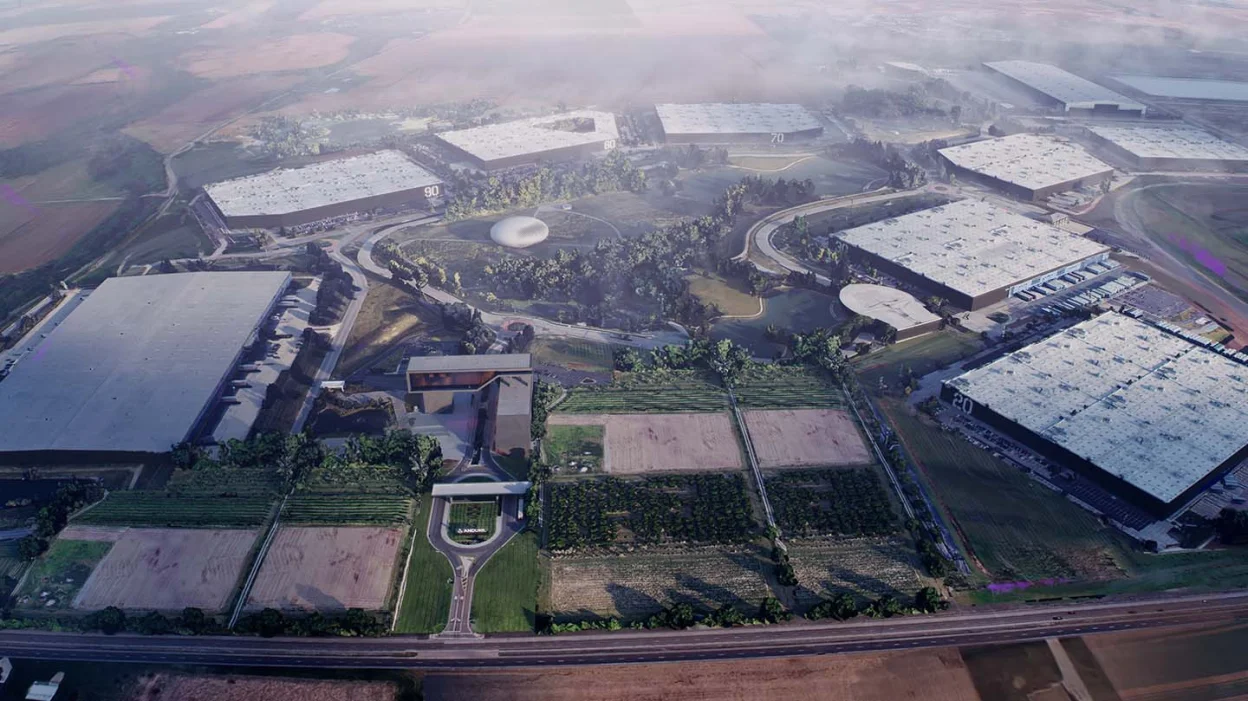

When Amgen announced in 2021 that it would invest $400 million to build a next-generation biomanufacturing plant in central Ohio, creating 400 jobs, the biotechnology giant was making a significant bet on Ohio. Four years later, that bet has more than tripled. In 2025, Amgen announced a $900 million expansion that will bring its total investment to $1.3 billion and increase its workforce commitment to 750 highly skilled positions.
For JobsOhio, the state’s unique private non-profit economic development corporation, Amgen’s decision to locate its production operations in Ohio is a big WIN. JobsOhio’s playing field is the fierce global competition to attract, retain and expand business investments and jobs from “tradeable industries” that can choose to locate wherever they feel most wanted and most likely to succeed.
Once an economic development deal is signed, JobsOhio publishes the agreed terms – company commitments for direct new job creation, associated payrolls and planned capital investments, along with any incentives provided by JobsOhio. One unbreakable rule applies to every JobsOhio deal: the project must yield a return on investment (ROI) to the state of Ohio (generally through state income taxes) that is greater than the total incentives offered to win the project.
The calculus seems straightforward and has guided the transparent reporting of results in JobsOhio’s monthly website postings and Annual Reports since the organization’s founding in 2011. But are direct plant operations jobs and payrolls the full extent of a project’s economic impact and ROI?
According to two comprehensive economic impact studies documenting “The Economic Impact of JobsOhio Projects 2011-21 Update” and “The Economic Impact of JobsOhio Projects 2022-24 Update”, the answer is a resounding, “No!”
The Economic Ripple Effect
The studies conducted by IMPLAN Group, the leading economic modeling application trusted by academic and professional economists worldwide, reveal how JobsOhio's projects and investments create powerful economic ripple effects that touch every corner of the state.
“These flagship economic impact reports indicate that commitments to JobsOhio and its seven regional partners support a much broader array of economic activity across Ohio than JobsOhio’s prior analyses,” said Justin Helmig, Chief Executive Officer of IMPLAN Group.
For example, Amgen’s 750 operations jobs will ultimately support approximately 1,725 total jobs across Ohio's economy after factoring in supply chain relationships and household spending effects. The construction activity alone has and will impact thousands more.
This impact multiplier plays out across every project JobsOhio and its seven regional network partners help bring to Ohio communities, from Fortune 500 expansions to emerging technology startups. The comprehensive economic impact studies by IMPLAN confirm that the 4,275 JobsOhio-supported projects executed between 2011 and 2024 have generated more than 305,000 ongoing operations jobs, nearly $20 billion in direct new payrolls, and attracted $137 billion in capital investments, as previously reported across thousands of JobsOhio public filings. The studies also reveal that facilities and operations supported by these projects have already generated approximately $12 billion in cumulative state tax revenue, delivering a remarkable return on JobsOhio’s $1.98 billion in incentive investments.
These results alone have catapulted Ohio from a bottom 10 state for business and job growth in 2011 to a Top 5 State for Business ranking by CNBC in 2025, and a Top 5 state for both total economic development projects and projects per capita for the past seven straight years by Site Selection magazine.
Yet, there’s much more to the story. When IMPLAN’s analysis accounts for the “indirect” and “induced” effects of those 4,275 economic development projects, the economic impact climbs to approximately 740,000 jobs statewide, generating $46.5 billion in total payroll, and returning $28 billion in cumulative state tax revenue to Ohio.
Following the Money: How One Job Creates Many More
Successful economic development sets in motion a powerful, positive chain reaction that IMPLAN has designed its data sets and Multi-Regional Input-Output analysis to capture and measure.
When a company announces a new facility in Ohio, the immediate impact is clear; construction starts. The economic effects compound on multiple levels from there. Consider the First Solar photovoltaic solar systems manufacturing megaproject in Northwest Ohio.
For First Solar, this included facilities in Perrysburg and Walbridge with a total capital investment of $1.6 billion supporting 3,972 construction jobs that earned $282 million in labor income. Construction suppliers generated an additional 819 jobs and $58 million in income that combined to generate spending money that flowed into the surrounding communities, fueling another 1,591 local jobs with yet another $77 million in payroll – bringing the total construction phase impacts to 6,382 jobs that earned $417.5 million in labor income.
The next phase of economic impact is direct company operations: First Solar plant workers get hired, paychecks get paid, products get made. The company hired 1,757 engineers, technicians, and production workers. Those are the “direct jobs” – the staff positions at the solar panel manufacturing facilities, which IMPLAN measures and reports as the initial effect of the primary economic activity.
From this point, the long-term economic ripples begin. The solar panel manufacturing plant needs raw materials, components, packaging, maintenance services, accounting support, legal counsel, and dozens of other inputs to operate. Ohio suppliers step up to fill these needs, hiring their own workers to meet the new demand. These are “indirect jobs” – positions created throughout the supply chain as IMPLAN tracks business-to-business purchases flowing through Ohio's economy. A logistics company adds truck drivers. A packaging manufacturer expands its workforce. A business services firm hires more accountants. An industrial maintenance company brings on additional technicians.
Meanwhile, all those workers – at the primary employer and its suppliers – earn paychecks and spend them in their communities. They buy groceries, go to restaurants, get haircuts, see doctors, send kids to daycare, shop for clothes, and pay for countless other goods and services. Local businesses expand to meet this increased consumer demand, creating “induced jobs” across retail, healthcare, education, hospitality, and service sectors. IMPLAN measures these induced effects by tracking household spending of labor income after accounting for taxes, savings, and commuters who spend income outside the region.
IMPLAN's analysis shows JobsOhio projects have an average jobs multiplier of 2.3 across the state. For every direct job created by a JobsOhio-supported company, supply chain relationships and household spending patterns create an additional 1.3 jobs elsewhere in Ohio's economy. First Solar’s commitment to hire 1,757 employees doesn't just create 1,757 new jobs; according to IMPLAN's economic modeling, it impacts approximately 4,397 total jobs when all the economic connections are counted.
The average payroll multiplier of 2.2, as measured by IMPLAN, tells a similar story. For every dollar in wages paid by JobsOhio partner companies, an additional $1.20 in labor income flows through Ohio's economy as the ripple effects take hold. In the case of First Solar, the payroll multiplier was determined to be 2.8X, meaning the company’s annual direct payroll of $98 million stimulates an additional $179 million in annual labor income for Ohio workers up and down the supply chain and across multiple other community businesses.
Compounding Returns to Ohio Workers and Taxpayers
JobsOhio's economic development investments deliver substantial returns to the state government through tax revenue generated by direct business operations, growing supply chains, enriched community goods and services, and massive construction activity. According to IMPLAN's fiscal impact analysis, JobsOhio projects generated approximately $28 billion in cumulative state tax revenue from 2011 through 2024. This figure accounts for all tax credits, exemptions, and abatements granted to companies, representing actual tax dollars collected after economic development incentives. Add to that the $1.4 billion JobsOhio originally paid the state for the purchase of the state’s liquor enterprise in 2013, and annual profit-sharing payments JobsOhio makes to the state treasury (totaling $756 million through FY 2025), and total dollars to the state generated from JobsOhio is $30.1 billion.
The consolidated return on investment is 15:1 – for every dollar JobsOhio spends on economic development ($1.98 billion through 2025), $15.25 has flowed back to the state in revenue ($28 billion in taxes + $2.21 billion from the liquor enterprise).
Looking forward, IMPLAN's 2024 economic modeling forecasts that the combined annual ongoing operations of all JobsOhio-supported facilities and their suppliers in 2024 and beyond will:
Support 694,000 jobs (12% of Total Ohio Jobs)
Pay $43 Billion to Ohio Workers (12% of Total Ohio Payroll)
Generate $78 Billion in Gross State Product (8.4% of GSP)
Return $3.6 Billion to Ohio’s Treasury (8.7 % of State Tax Revenue)
Constitute an enduring contribution to Ohio's fiscal health that will continue as long as these businesses operate in the state.
These impacts grow further every year that JobsOhio continues to operate and secure additional economic development deals.
A Conservative Analysis: The Real Impact Is Likely Higher
The IMPLAN economic impact studies employed rigorous, conservative methodologies that likely underestimate the true economic impact of JobsOhio projects. As IMPLAN President and CEO Justin Helmig noted: "This report represents the likely minimum level of impacts due to the fact that job retention and equipment purchases are excluded from the data inputs in the report."
Several significant categories of economic activity were excluded from IMPLAN's analysis:
Retained jobs - While JobsOhio has helped retain tens of thousands of jobs that might otherwise have left the state, IMPLAN's analysis counted only new job creation.
Equipment purchases - Hundreds of millions of dollars spent on technology, furniture, fixtures, and equipment were excluded because available data did not allow IMPLAN researchers to determine the origin or specific type of equipment companies purchased.
Special projects - More than 100 project completions, such as JobsOhio's three Innovation Districts and Vibrant Community grants, were not included in IMPLAN's analysis unless directly tied to specific company projects with measurable job commitments.
Future supply chain growth - Intel's Ohio operations, for example, are expected to expand from 40 suppliers to more than 200 as facilities reach full capacity, creating substantial additional economic impacts not reflected in these studies.
Building Ohio's Prosperous Future
The combined results from both IMPLAN studies document how strategic economic development investments create powerful, lasting benefits that extend far beyond initial project announcements. The jobs created, facilities built, and supply chains established through JobsOhio projects form a foundation for sustained economic growth across every Ohio region.
As companies continue to operate, expand, and attract additional suppliers and partners, these impacts measured by IMPLAN will accumulate year after year. Moreover, many of the largest projects announced in recent years remain under construction or are just beginning operations, meaning their full economic contributions have yet to materialize. As these facilities ramp up to full capacity, the annual tax impacts measured in future IMPLAN studies will continue to grow, as well.
With ongoing efforts by JobsOhio and its seven regional partners in collaboration with state leaders and agencies to attract new investment and support existing Ohio businesses, Ohio's economy will continue to thrive, creating opportunity and prosperity for communities throughout the state.
Team Ohio is winning.
JobsOhio’s Total Impact For Ohio 2011-2024: Jobs, Payroll, and Ongoing Returns
According to IMPLAN's comprehensive analysis, JobsOhio and its regional network partners secured commitments for 305,625 direct jobs with associated payroll of nearly $20 billion from 2011 through 2024. When indirect supply chain relationships and induced household spending patterns are included in IMPLAN's data sets and Multi-Regional Input-Output modeling, the total employment impact reaches approximately 740,000 jobs with a combined payroll of $46.5 billion.
The construction employment impact measured by IMPLAN is particularly significant. JobsOhio projects supported 13% of all construction jobs in Ohio during the full study period. IMPLAN's data shows this figure jumped from 11% in the 2011-2021 analysis period to 19% in the 2022-2024 period as megaprojects accelerated construction activity across the state.

The state-wide impact of JobsOhio’s economic development projects, while already substantial, are just beginning. Many of these facilities are still under construction or just beginning full-scale operations. According to IMPLAN's modeling, these jobs and the economic activity they generate will contribute significantly to Ohio's overall economy every year from 2024 forward. The annual ongoing impact from operational facilities represents 694,000 jobs (12% of total Ohio jobs), $43 billion of payroll (12% of total Ohio payroll), and contributes $78 billion annually to Gross State Product – equivalent to 8.4% of the state's total economic output. The $3.6 billion in annual tax proceeds represents 8.7% of all state tax revenue.

For more information about economic development opportunities in Ohio, visit www.JobsOhio.com.
Regional Impact: Seven Economic Development Partnerships Driving Growth
JobsOhio's statewide impact flows in partnership with seven regional economic development organizations, each leveraging unique regional strengths to attract and grow businesses across Ohio. IMPLAN modeled each project in its specific JobsOhio region and accounted for impacts of multi-region commodity flows and commuting patterns.
Central Ohio (One Columbus)
Serving 11 counties around Columbus, the Central region is home to 2.3 million people and major employers including Nationwide, State Farm, Cardinal Health, Honda and Intel's forthcoming semiconductor complex. JobsOhio economic development projects in this region include United Healthcare, Kohl’s, OhioHealth, Illuminate USA, Gifthealth, and Anduril.
Projects: 867 (2011-2024)
Total Jobs Impact: 200,000+ jobs
Total Payroll: $13.3 billion
Annual State Taxes: $1 billion
East Region (Lake to River)
JobsOhio's newest regional partner, formed in 2024, serves a four-county advanced manufacturing and energy hub in Eastern Ohio, home to U.S. Steel, Steelite International, and Sobe Thermal Energy Solutions. JobsOhio economic development projects in this region include PlastPro 2000, Transglobal Door, Ursa Major Technologies, and MAC Trailer.
Projects: 35 (2022-2024)
Total Jobs Impact: 3,292 jobs
Total Payroll: $194 million
Annual State Taxes: $10 million
Northeast Ohio (TeamNEO)
Serving 14 counties in the greater Cleveland region with over 800 business headquarters and two million workers. Historically a manufacturing powerhouse, the region spans advanced manufacturing, automotive, financial services, logistics, aerospace, polymers, healthcare, biotechnology, and information technology. JobsOhio economic development projects in this region include Amazon, HomeGoods, Ford, Schaeffler, Aligned Data Centers and Kroger.
Projects: 1,169 (2011-2024)
Total Jobs Impact: 203,000 jobs
Total Payroll: $12.6 billion
Annual State Taxes: $964 million
Northwest Ohio (Regional Growth Partnership)
Supporting Toledo and 17 surrounding counties with a focus on advanced manufacturing, automotive, energy, food processing, and logistics. Home to ProMedica Health and The Andersons. JobsOhio economic development projects in this region include First Solar, UPS, McLane Ohio, Sheetz Distribution, Amazon and Husky Marketing and Supply Company.
Projects: 649 (2011-2024)
Total Jobs Impact: 80,000 jobs
Total Payroll: $4.5 billion
Annual State Taxes: $409 million
Southeast Ohio (Ohio Southeast)
Spanning 25 counties across nearly a third of the state's land area, focusing on energy and chemicals, wood and paper products, automotive and aerospace, food manufacturing, logistics, and metals fabrication. JobsOhio economic development projects in this region include Elemental Recycling, Fanatics, Tri-State Beef, Bellisio Foods, Starr’s Auto Body, AMG Vanadium, and General Mills.
Projects: 400 (2011-2024)
Total Jobs Impact: 37,000 jobs
Total Payroll: $1.8 billion
Annual State Taxes: $158 million
Southwest Ohio (REDI Cincinnati)
A global economic player with 10 Fortune 500 firms in a 16-county footprint, including Procter & Gamble, Kroger, Macy's, Medpace, Resilience U.S. and Amazon's $1.5 billion Prime Air hub at the airport. JobsOhio economic development projects in this region include Barclays Services, General Electric, Bed Bath & Beyond, Medpace, Total Quality Logistics, Nestlé PURINA, and Resilience US.
Projects: 611 (2011-2024)
Total Jobs Impact: 119,000 jobs
Total Payroll: $8.3 billion
Annual State Taxes: $548 million
Western Ohio (Dayton Development Coalition)
Supporting a culture of innovation from historical roots in wood and fabric industries to present-day leadership in carbon fiber and advanced composites. The region is steeped in aviation history and is attracting advanced aerospace and defense industries. JobsOhio economic development projects in this region include Gabriel Brothers, Procter & Gamble, Fuyao Glass America, Honda Development & Manufacturing, SEMCORP Manufacturing, Silfex, and U.S. Air Force Life Cycle Management Center (AFLCMC).
Projects: 532 (2011-2024)
Total Jobs Impact: 100,000 jobs
Total Payroll: $5.9 billion
Annual State Taxes: $509M
IMPLAN's regional analysis includes the direct, indirect, and induced effects from projects located within each region, as well as residual impacts from trade and commuting relationships with projects in other regions. The results listed above express the total impact on a region from all projects within the state.


